Introduction: The Secret Language of Concentration
(Small Paragraph for Blog Page Snippet)
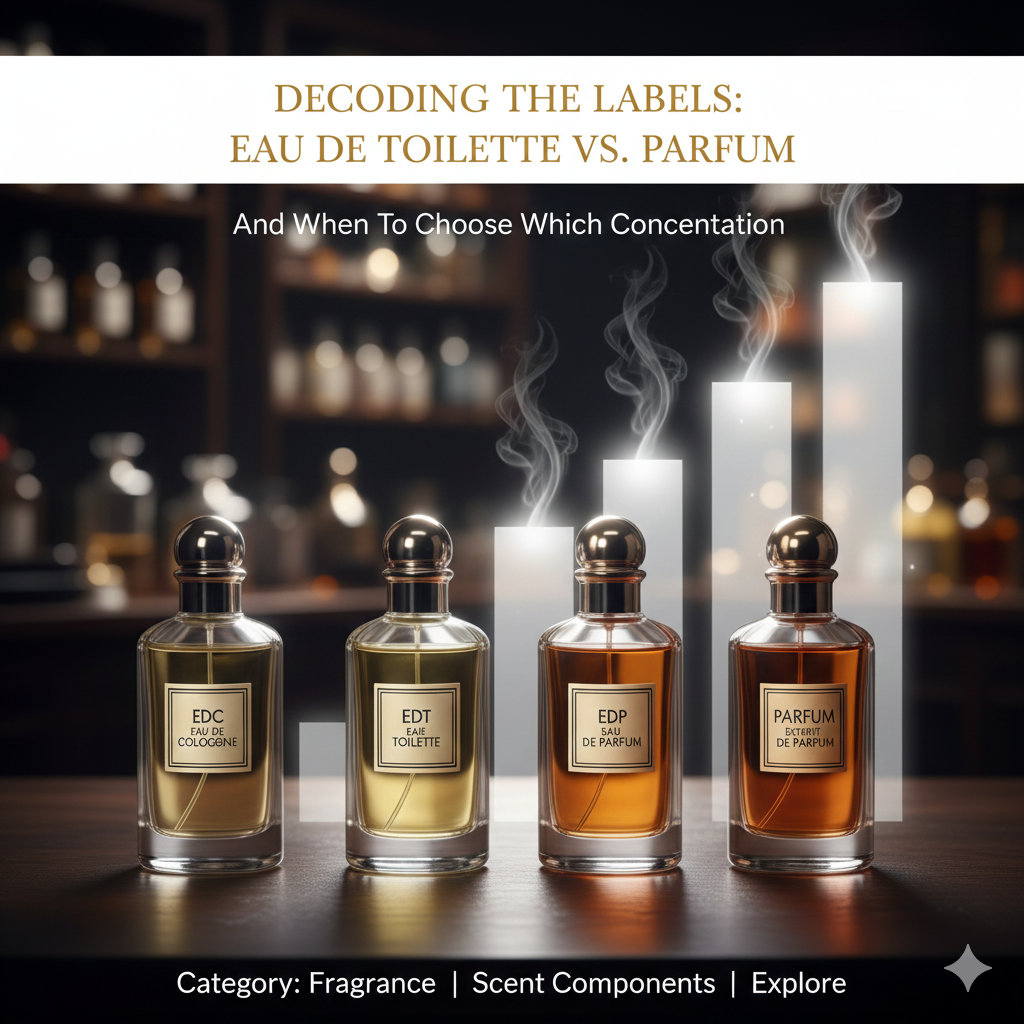
When shopping for fragrance, the labels EDP, EDT, EDC, and Parfum often dictate your choice, but few consumers truly understand what those acronyms mean for performance. These labels represent the concentration of pure fragrance oil dissolved in alcohol—the single most important factor determining a scent’s longevity, projection, and price. Stop wasting money on fleeting scents! We break down the industry’s concentration language, providing a clear guide on the differences between these labels and when to choose a light Eau de Toilette versus a powerful Extrait de Parfum for every occasion.
Section 1: The Four Main Concentration Categories
The general rule is: Higher concentration of oil = Higher price, longer wear time, and less alcohol.
| Acronym / Name | Oil Concentration Range | Typical Longevity | Best Use Scenario |
| Extrait / Parfum | 20% to 40% | 8+ hours | Evening, Formal Events, Cold Weather. |
| Eau de Parfum (EDP) | 15% to 20% | 5 to 8 hours | All-day wear, professional settings, standard signature scent. |
| Eau de Toilette (EDT) | 5% to 15% | 3 to 5 hours | Casual daytime, summer, office (when discretion is key). |
| Eau de Cologne (EDC) | 2% to 4% | 1 to 3 hours | Refreshing splash, post-gym, very light quick scent. |
Section 2: Beyond Longevity: How Concentration Affects the Scent
The concentration doesn’t just impact how long a scent lasts; it fundamentally changes the way a scent smells and behaves.
1. The Scent Profile Shift
- EDT vs. EDP: An EDT version of a fragrance emphasizes the Top Notes (citrus, fresh elements) because of the higher alcohol content and lower oil load. The EDP version will emphasize the Base Notes and Heart Notes (woods, florals, fixatives) because of the higher oil concentration.
- The Flanker Effect: This is why buying a flanker labeled “EDP” or “Intense” often results in a scent that smells much warmer, deeper, and sweeter than the “EDT” original.
2. Projection vs. Intimacy
- EDT (High Alcohol): High alcohol content ensures a greater projection (the radius of your scent cloud) because the alcohol evaporates rapidly, pushing the scent molecules aggressively outward.
- Parfum (High Oil): The high oil content makes the scent wear closer to the skin, creating an intimate, sophisticated “scent bubble.” It projects less widely but lasts far longer.
Section 3: Making the Right Choice for Your Budget and Day
Choosing the right concentration is a matter of prioritizing your needs:
- For the Office: Choose an EDT. Its shorter wear time and lower oil content make it naturally discreet and less likely to cause olfactory fatigue in colleagues.
- For Investment: Choose a Parfum or Extrait. While the sticker price is higher, the sheer strength and concentration mean you need to apply significantly less, making the cost-per-wear competitive.
- For Layering: Use an EDC or a light EDT as the initial, clean layer, and then top it with a heavier EDP to lock in the base notes without creating a cloying effect.
Conclusion: Shop Smarter, Not Harder
Understanding the difference between an EDT and a Parfum is the single most valuable piece of knowledge for any fragrance consumer. You can now shop with the certainty that you are choosing the format engineered for your exact performance needs, guaranteeing satisfaction for your investment.
Call to Action
Which format do you prefer for your signature scent: the high projection of an EDT or the long intimacy of a Parfum? What is the highest concentration level you currently own?
🏷️ Suggested Tags
#PerfumeConcentration #EDP #EDT #Parfum #FragranceTips #LongevityHacks #TheSmell
🔗 Internal Linking (Crucial for SEO)
- Link 1 (Related Performance): Explain the terms in Sillage vs. Projection: Defining the Key Metrics of a Perfume’s Performance.
- Link 2 (Related Science): Detail the role of the long-lasting molecules in The Secret Life of Base Notes: How Fixatives Keep Your Scent Alive.
- Link 3 (Related Style): Apply this knowledge to cold weather in The Ultimate Guide to Transitioning Your Perfume Wardrobe for Fall & Winter.
Share this post: on Twitter on Facebook