Introduction: The Patience of Perfume
(Small Paragraph for Blog Page Snippet)
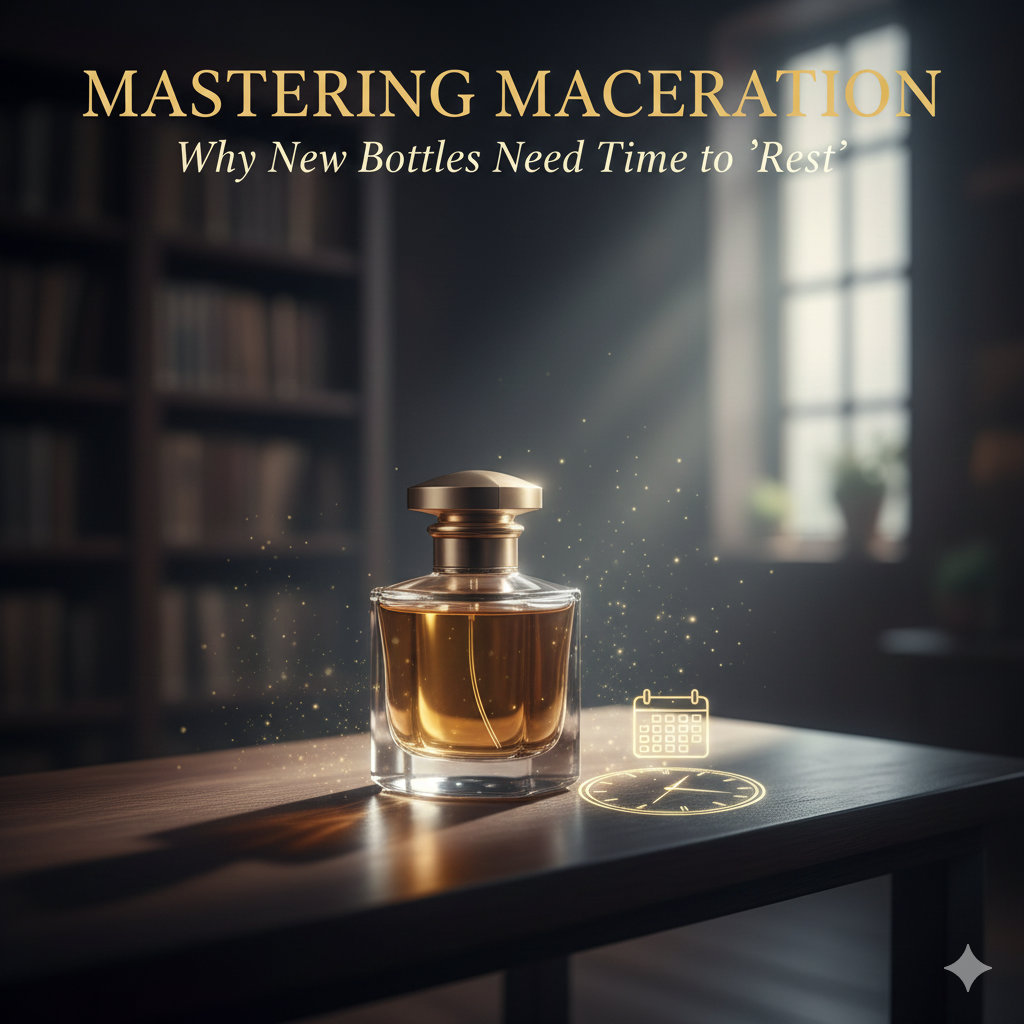
You unbox a highly anticipated new fragrance, spray it eagerly, and feel… a little disappointed. It smells sharp, disjointed, or weaker than the tester you tried. Don’t panic! Your new perfume is likely suffering from a lack of maceration, a final, crucial stage in perfumery that continues long after the bottle leaves the factory. This guide explains why giving your new bottle time to “rest” can dramatically improve its performance, deepen its notes, and unlock its full, intended potential. Discover the secret to transforming a fresh bottle into a powerhouse simply by waiting.
Section 1: What is Maceration? (The Final Chemical Step)
The Scientific Process
Maceration is the process where the blended fragrance concentrate (oils) is left to sit in the alcohol solution, usually in a cool, dark environment, for a period of time before being filtered and bottled.
- The Goal: To allow the complex aromatic compounds (oils) to fully integrate and harmonize with the ethyl alcohol (the solvent). The components essentially “get to know each other.”
- The Result: The scent becomes smoother, richer, and the base notes gain their full adhesive strength.
The Rush to Market
While all perfumes undergo a mandatory maceration period at the factory, the push for quick retail turnover often means the process is cut slightly short. Additionally, temperature changes during shipping and handling can temporarily disrupt the scent’s balance. When you first spray it, the blend can be chemically unsettled.
Section 2: How Maceration Improves Your Perfume
The “resting” period you give your perfume at home works on two key areas:
1. Smoothing the Texture
- The Problem: When you first spray, the opening can be overly alcoholic, sharp, or chemically abrasive.
- The Solution: Resting allows the volatile top notes to settle into the heavier base notes, creating a seamless, rounder transition between the scent layers. The scent feels less jagged and more luxurious.
2. Deepening the Drydown
- The Problem: The all-important base notes (the fixatives that determine longevity) may feel weak or absent initially.
- The Solution: Over a few weeks, the denser molecules (like Amber, Vanilla, and Woods) become fully saturated in the alcohol, increasing their adherence and projection. This is why a rested perfume often lasts longer and projects further than a brand new one.
Section 3: The Practical At-Home Resting Ritual
You can easily encourage a full maceration and “breathe life” into your new purchase:
- Introduce Oxygen: Spray the fragrance 5 to 10 times upon first opening (this is called “priming the atomizer”). This introduces a tiny bit of oxygen into the liquid, which gently initiates the final chemical phase.
- Seal and Store: Screw the cap on tightly and place the bottle back into its original box.
- Choose the Location: Store it in a cool, dark, and stable place—like a closet or drawer—away from light and heat fluctuation.
- The Wait: Let the bottle rest for 2 to 4 weeks. Do not smell or spray it during this time.
- The Reveal: After resting, spray it again and compare the scent to your first impression. You should find it richer, deeper, and stronger.
Conclusion: The Patience That Pays Off
Maceration is a quiet, natural phenomenon that proves great things come to those who wait. By simply allowing your fragrance to rest in ideal conditions, you are completing the final step of the perfumer’s art. Treat your new bottle with patience, and you will be rewarded with the best possible version of your chosen scent.
Call to Action
Have you ever noticed your perfume smelling better after a few weeks? Which bottle are you currently resting, and what note are you hoping will deepen the most during its wait?
🏷️ Suggested Tags
#Maceration #PerfumeHacks #LongevityTips #PerfumeScience #FragranceTips #TheSmell
🔗 Internal Linking (Crucial for SEO)
- Link 1 (Related Science): Explain the ingredients at work with The Secret Life of Base Notes: How Fixatives Keep Your Scent Alive.
- Link 2 (Related Care): Ensure the bottle rests in the right place with Keep It Fresh: How to Properly Store Your Perfumes and Prevent Them From Turning.
Link 3 (Related Performance): Understand the goal of better projection with Sillage vs. Projection: Defining the Key Metrics of a Perfume’s Performance.
Share this post:
on Facebook