Introduction: The Great Fragrance Debate
(Small Paragraph for Blog Page Snippet)
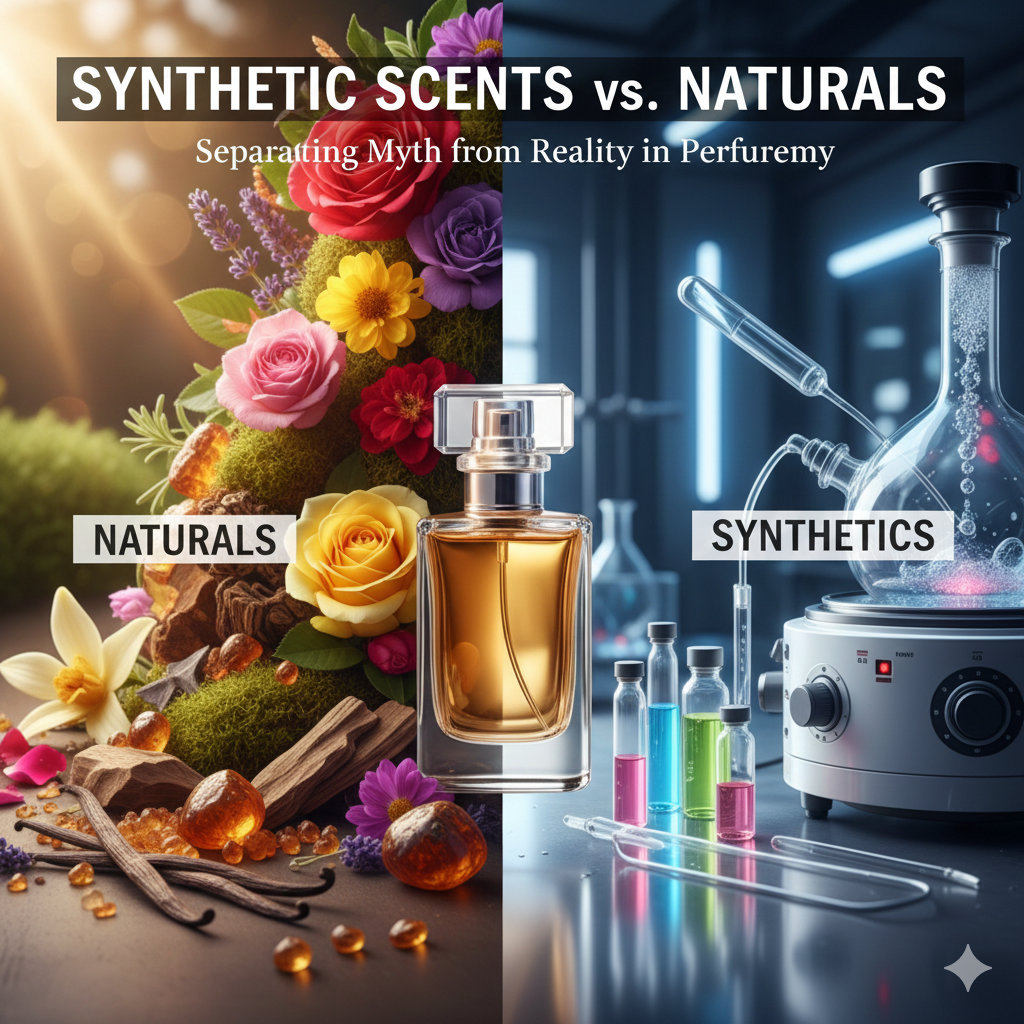
In the world of fine fragrance, few topics are as debated—and misunderstood—as the rivalry between natural extracts and synthetic molecules. Many assume “all-natural” means superior quality and safety, while synthetic often carries a stigma of being “cheap” or “unnatural.” This couldn’t be further from the truth! We’re breaking down the science and separating the myths from reality, revealing why the most beautiful, long-lasting, and responsible perfumes today rely on a masterful blend of both natural essences and cutting-edge synthetic compounds.
Section 1: The Case for Naturals (The Soul and Complexity)
What Naturals Bring to the Bottle
Natural ingredients are derived directly from plants (flowers, wood, leaves, roots) through distillation, expression, or extraction.
- Complexity: Naturals are chemically messy—in a good way! A single rose oil contains hundreds of different molecules, giving it a rich, nuanced, and impossible-to-replicate depth.
- A Unique Texture: They bring a vibrant, organic feel, especially in the opening of a scent.
The Drawbacks
Naturals come with significant challenges for the perfumer:
- Allergen Risk: Natural materials are often high in common allergens.
- Inconsistency: Quality varies widely depending on harvest, weather, and region (like fine wine).
- Cost and Ethics: They are expensive and can be environmentally unsustainable (e.g., harvesting Sandalwood or the huge amount of petals needed for Rose Absolute).
Section 2: The Case for Synthetics (The Structure and Safety)
Synthetics (or aroma chemicals) are molecules created in a lab. They are the backbone of modern perfumery.
Why Synthetics Are Essential
- Safety and Ethics: Synthetics replace controversial or endangered natural ingredients (like natural Musk, Ambergris, or Oud) with safe, legal, and sustainable alternatives.
- Precision and Stability: A synthetic molecule (like Calone for an aquatic effect) is chemically pure and stable. This consistency is essential for reproducing a fragrance accurately, batch after batch.
- Creativity: Many iconic scents cannot be created naturally. Notes like “rain,” “ozone,” “clean laundry,” or “lily of the valley” (Lilial or Hydroxycitronellal) exist only because of synthetic ingenuity.
Myth Busting: “Synthetics are Cheaper”
While some are inexpensive, many high-end molecules are incredibly costly to research, develop, and produce (e.g., the complex synthetics used in modern Oud or Iris accords). They are used not to cut costs, but to improve quality and longevity.
Section 3: The Golden Standard – The Blend
The world’s best-selling and most artistic perfumes use both. The perfumer uses synthetics for structure, projection, and stability, and naturals for texture, soul, and complexity.
- The Perfect Marriage: A perfumer might use synthetic Sandalwood (Ebanol or Javanol) for its clean projection and stability, then add a tiny touch of natural Sandalwood to give it that creamy, authentic depth.
- The Best Approach: Don’t focus on natural or synthetic; focus on quality. High-quality synthetics are safe and necessary; low-quality naturals can be unsustainable and allergenic.
Conclusion: Science Meets Art
The debate over naturals and synthetics is outdated. Today, the most responsible and cutting-edge perfumers are artists who know how to expertly utilize both palettes. Choosing a modern scent means choosing science, art, sustainability, and quality. Embrace the blend, and appreciate the creative freedom that synthetics bring to the art form.
Call to Action
Which synthetic molecule are you most grateful for (e.g., Calone for aquatics or Hedione for florals)? Do you find that synthetic notes generally last longer on your skin? Share your thoughts on the modern blend!
🏷️ Suggested Tags
#SyntheticVsNatural #PerfumeScience #TheSmell #Ingredients #Sustainability #CleanBeauty
🔗 Internal Linking (Crucial for SEO)
- Link 1 (Related Ethics): Discuss the ethical reason for synthetics in Sustainable Scents: Exploring the World of Ethical and Eco-Friendly Perfumery.
- Link 2 (Related Ingredients): Learn about powerful synthetics in The Power of Oud: Understanding the King of Fragrance Ingredients.
- Link 3 (Related Structure): Understand how these materials function in The Secret Life of Base Notes: How Fixatives Keep Your Scent Alive.
Share this post:
on Facebook