Introduction: Scenting Without Offending
(Small Paragraph for Blog Page Snippet)
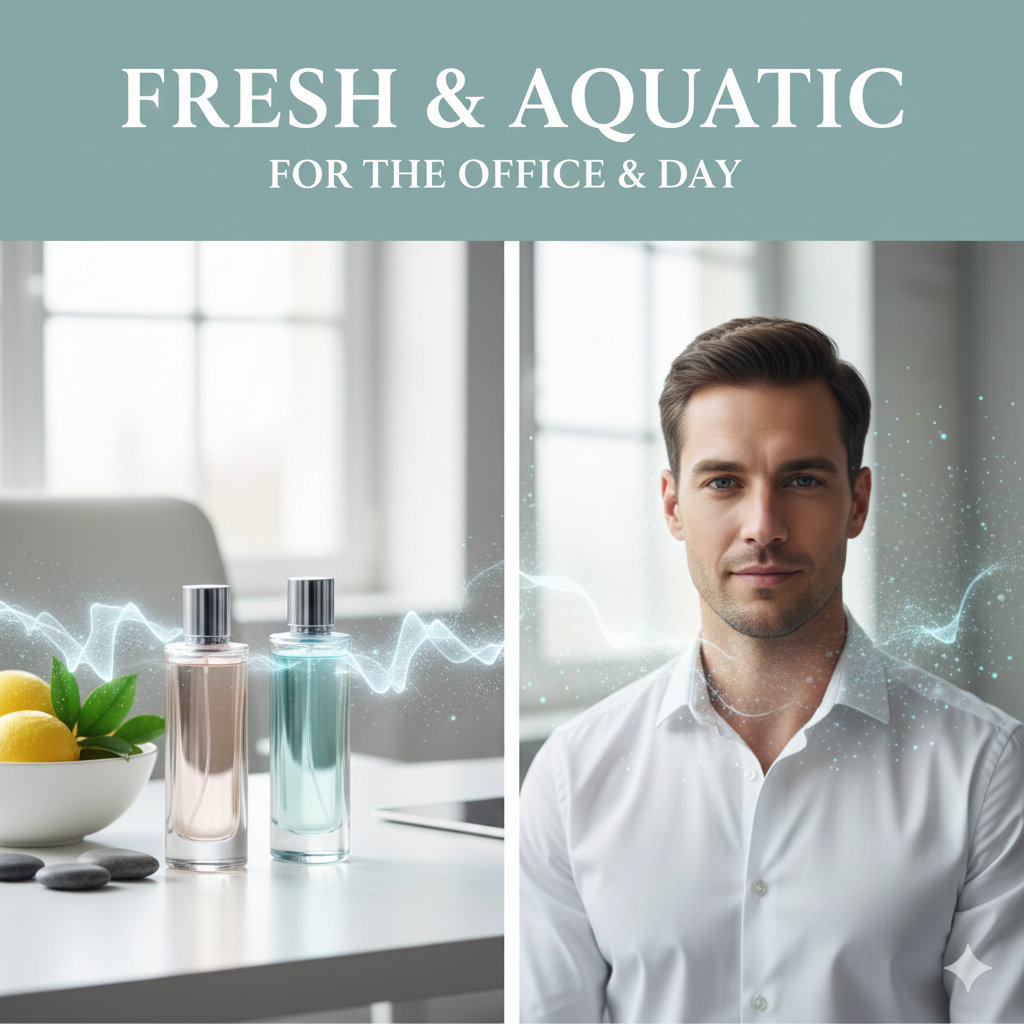
Choosing a fragrance for professional or daytime settings requires a delicate touch. You need a scent that is clean, refreshing, and projects subtle confidence—not one that fills the entire boardroom. The solution lies in the world of fresh, citrus, and aquatic notes. These families offer invigorating, airy aromas that are universally appealing and never overwhelm. We’ve compiled a list of the top recommendations that strike the perfect balance between great performance and appropriate discretion, ensuring you smell impeccably put-together without ever being intrusive.
Section 1: The Code of Conduct for Office Scents
Before choosing a fragrance, understand the environment:
1. Discretion is Key (The Sillage Rule)
- Goal: Your scent should be noticeable only within arm’s length—a subtle “scent bubble.”
- Strategy: Avoid heavy gourmands, dense ouds, or intense tuberose. Stick to light EdTs or simple, low-projection EdPs that wear close to the skin.
2. Universal Appeal
- Goal: Choose notes that are generally found pleasant and relaxing by most people.
- Strategy: Fresh, crisp scents (like green tea, clean linen, or light woods) rarely offend. Heavily polarizing notes (like animalic musk or strong patchouli) should be saved for the evening.
Section 2: Why Fresh Notes Excel in Daytime
Fresh and aquatic fragrances are built for these environments due to their structure:
- High Volatility: Citrus and aquatic molecules are light and evaporate quickly, providing an immediate burst of freshness but fading to a subtle skin scent quickly.
- Association with Cleanliness: These notes mimic soaps, fresh laundry, and running water, tying the fragrance directly to a feeling of professionalism and hygiene.
Section 3: The Three Best Categories for Professional Wear
We break down the safest and most effective scent families for the workplace:
1. Citrus Aromatic (The Invigorator)
- Key Notes: Lemon, Bergamot, Neroli, Verbena, Green Tea.
- The Vibe: Bright, energetic, and focused. It feels like a fresh start to the day.
- The Best Time: Perfect for Monday mornings or warm weather when you need a mental lift.
2. Light Woods and White Musks (The Subtle Confidence)
- Key Notes: Clean Sandalwood, Cedar, White Musk, Cashmeran.
- The Vibe: Warm, creamy, and quietly sophisticated. It adds texture and grounding without density.
- The Best Time: Excellent year-round; ideal for formal meetings where you need to project stability.
3. Aquatics and Ozonic (The Clean Air)
- Key Notes: Sea Salt, Marine Notes, Watery Florals, Calone.
- The Vibe: Crisp, cool, and effortless. It smells like a breeze coming through an open window.
- The Best Time: Spring and summer days, or any time the office feels stuffy.
Section 4: Application Strategy for Office Wear
Even the lightest scent can be too much if over-applied.
- Apply Only to the Torso: Spray once or twice on your chest or midriff under your clothing. The fabric will act as a filter, allowing only a gentle warmth of the scent to diffuse outwards.
- Avoid the Neck/Head: These areas are too close to the noses of colleagues during conversation. Keep the scent low and subtle.
- Decant for Touch-Ups: If you work long hours, carry a small decant of your chosen scent, but only reapply a single, light spray during a lunch break—not at your desk!
Conclusion: Making the Right Impression
Your daytime fragrance should enhance your presence, not define it. By choosing clean, subtle, and fresh aquatic or citrus compositions, you ensure you smell fantastic while maintaining professionalism. Master the art of subtle sillage, and your invisible accessory will always leave the right impression.
Call to Action
What is your go-to “safe” office fragrance, and why do you find it perfect for the workplace? Share your recommendations with others looking for their new daytime staple!
🏷️ Suggested Tags
#OfficeFragrance #DaytimeScent #AquaticFragrance #BestFragrances #WorkplaceScents #Catalogs
🔗 Internal Linking (Crucial for SEO)
- Link 1 (Related Sillage): Explain the concept of projection with Sillage vs. Projection: Defining the Key Metrics of a Perfume’s Performance.
- Link 2 (Related Concentration): Choose the right light formula with Decoding the Labels: Eau de Toilette vs. Parfum and When to Choose Which Concentration.
- Link 3 (Related Layering): Apply your scent discreetly with The Complete Grooming Symphony: Seamlessly Integrating Fragrance into Your Daily Routine.
Share this post: on Twitter on Facebook